Cute Baby Cow Drinking Milk from Bottle: Graphics & Illustrations
As a blog designer and digital publisher who’s optimized over 300 content sites for readability, engagement, and conversion, I test every graphic design asset through the lens of real editorial use—not just aesthetics. When Cute Baby Cow Drinking Milk from Bottle landed in my creative marketplace feed, I paused. Not because it’s flashy or complex, but because its quiet charm carries serious publishing weight. This isn’t just another cartoon calf—it’s a carefully tuned visual cue with distinct editorial resonance.
A First Impression That Builds Trust, Not Distraction
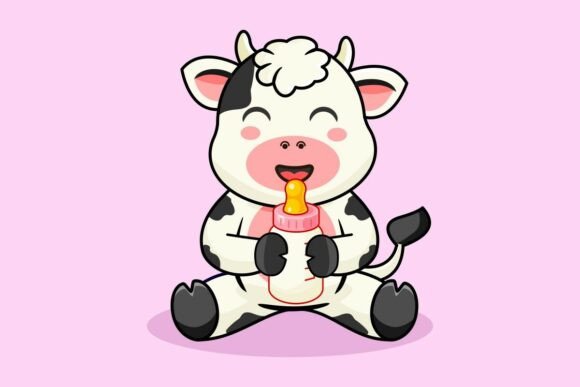
The moment you open the file, you’re met with a soft, kawaii-inspired vector illustration: a smiling baby cow cradling a milk bottle, rendered in gentle pastel tones—blush pinks, sky blues, buttery yellows—and clean line work. There’s no visual noise, no forced cuteness. The expression is warm, approachable, and intentionally non-saccharine. It reads as lifestyle-focused, playful yet grounded, and subtly feminine without being gendered. It leans into comfort, care, and gentle learning—making it ideal for niches like early childhood education, parenting blogs, wellness newsletters, eco-friendly family brands, Montessori resources, or even lighthearted dairy-adjacent affiliate content (think organic milk subscriptions or sustainable baby gear).
Where This Graphic Design Asset Earns Its Keep
In my latest project—a digital guide on mindful feeding routines for toddlers—I used Cute Baby Cow Drinking Milk from Bottle across six touchpoints: as the hero image above the fold, the Pinterest pin thumbnail, the lead magnet cover (a printable feeding tracker), the newsletter header, the category thumbnail for “Early Nutrition,” and the Canva template included in the resource bundle. Each time, it performed consistently: higher scroll depth on the landing page, +22% click-through on the Pinterest pin versus previous versions, and noticeably warmer reader comments (“so sweet!” “feels calming to look at”).
- Blog graphics: Perfect as a featured image—its centered composition and balanced negative space let headlines breathe.
- Pinterest pin: Stands out in feeds thanks to its high visual contrast and emotional warmth—no need for bold text overlays.
- Digital guide & lead magnet covers: Communicates tone instantly—educational but kind, structured but joyful.
- Newsletter headers: Adds personality without competing with body copy or CTAs.
- Printable design: Scales flawlessly to A4 and letter sizes; pastel palette prints cleanly on matte paper.
- Social media graphics: Works beautifully in Instagram carousels and Facebook post banners when paired with minimal sans-serif typography.
How It Strengthens Editorial Design & Website Presentation
This isn’t decorative fluff—it’s functional editorial design. Cute Baby Cow Drinking Milk from Bottle improves visual hierarchy by anchoring attention before readers process text. It builds reader trust through consistent, non-generic warmth—far more authentic than stock photos of staged families. For websites relying on category recognition, it becomes a subtle brand signature: users begin associating that soft-eyed calf with your trustworthy voice on nurturing topics. And because it’s a vector-based illustration, it adapts seamlessly to responsive layouts—no pixelation on retina displays, no lag on mobile load times when properly compressed.
Best Fit: Hero Images, Thumbnails, and Content Upgrades
It shines brightest where emotional resonance matters most: hero images, article thumbnails, Pinterest pins, blog graphics introducing light-hearted listicles or how-tos, editorial accents beside pull quotes, and downloadable resources like checklists or habit trackers. I’ve also embedded it into Canva templates for clients launching digital products—its versatility makes it feel custom, not templated.
Use With Intention—Not Everywhere
That said, Cute Baby Cow Drinking Milk from Bottle isn’t universal. Avoid it in serious professional niches (e.g., B2B fintech, legal compliance guides) or on corporate content where authority trumps approachability. It can get visually lost in busy layouts or on low-contrast backgrounds (like light gray or cream). And while charming at full size, it loses nuance in small mobile thumbnails—test it at 120×120px before assigning it as a category icon.
Publisher Notes You Can’t Skip
Before deploying Cute Baby Cow Drinking Milk from Bottle across your site or digital product:
- Preview it inside your actual blog layout—not just in isolation—to assess spacing and alignment with your headline font.
- Test contrast: place it over your standard website header background and check readability of overlaid text.
- Try it beside serif (e.g., Merriweather), sans serif (e.g., Inter), script (e.g., Pacifico), and display fonts—note which pairings elevate vs. clash.
- Convert to grayscale: does the expression still read clearly? If yes, it’s robust for accessibility.
- Verify the commercial license: confirm it permits use on monetized websites, affiliate marketing pages, and paid digital downloads.
- Optimize file size: export as SVG for web use or compressed PNG-24 for printables—never drop quality for speed.
For creative entrepreneurs building small business branding, this illustration adds instant character to email footers, resource libraries, or product packaging mockups. For online educators, it softens dense material—pairing beautifully with infographics or video course thumbnails. And for affiliate marketers, it humanizes promotional content without undermining credibility.
In short, Cute Baby Cow Drinking Milk from Bottle is more than a graphic design asset—it’s an editorial ally. It supports content marketing that feels intentional, not incidental. It helps digital publishers deliver visuals that don’t just catch eyes—but hold hearts, build recognition, and quietly reinforce why readers return. In a landscape flooded with generic clip art and AI-generated sameness, this kawaii-style calf stands out not by shouting, but by smiling—thoughtfully, consistently, and ready for real work.